
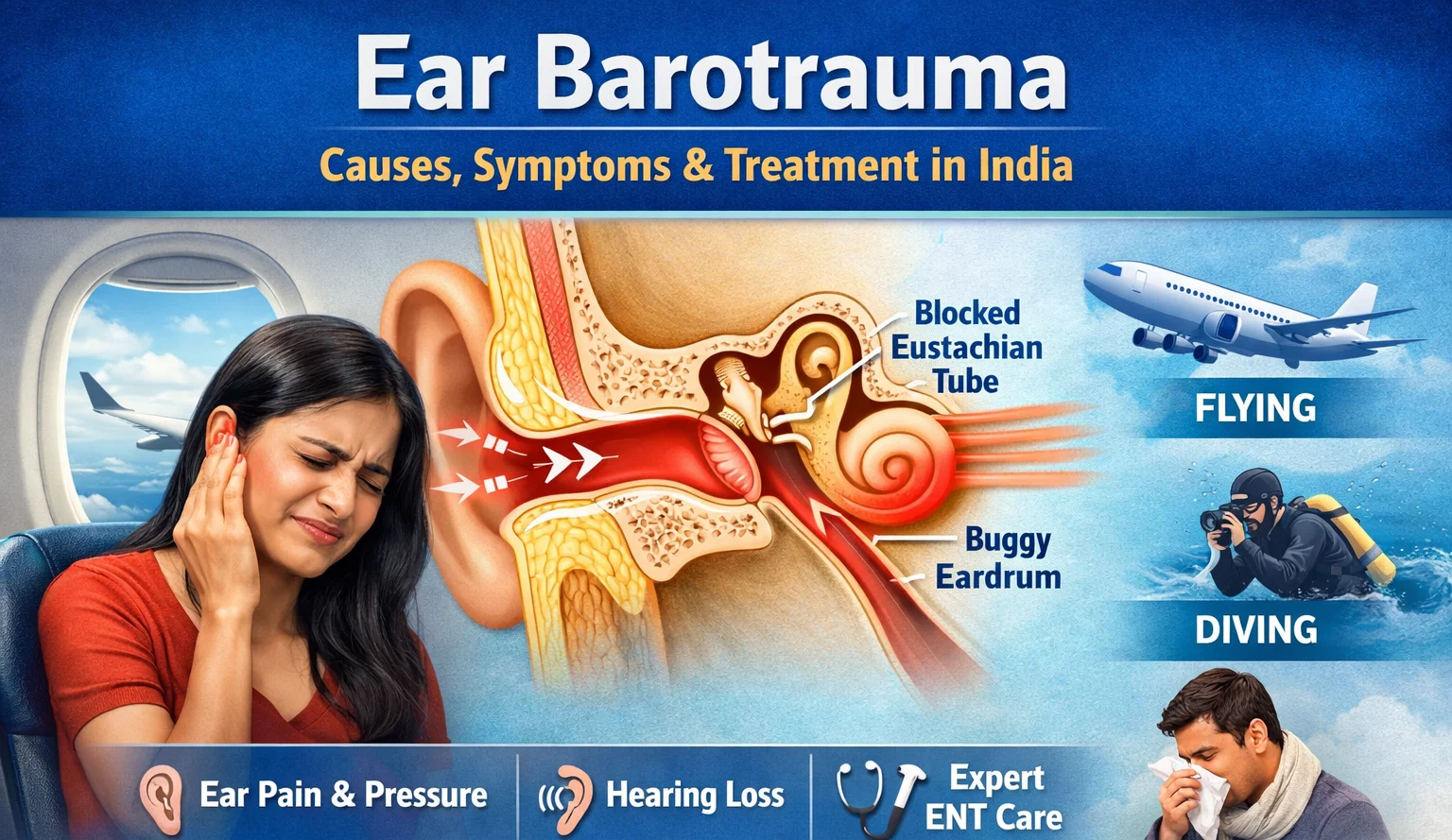
Ear barotrauma is a common but often misunderstood ear condition that occurs when there is a sudden change in air pressure and the ear cannot adjust properly. It is frequently experienced during air travel, scuba diving, mountain driving, or even during severe colds and sinus infections. While mild cases usually heal on their own, severe ear barotrauma can lead to hearing loss, ear pain, or even damage to the eardrum if left untreated.
At Earsage, we regularly see patients with ear discomfort, blocked ears, and hearing issues caused by pressure changes. Understanding ear barotrauma, its symptoms, and timely treatment can help prevent long-term complications.
What Is Ear Barotrauma?
Ear barotrauma is an injury to the ear caused by an imbalance between the air pressure inside the middle ear and the external air pressure. The middle ear is connected to the back of the nose through a narrow passage called the Eustachian tube, which helps equalize pressure.
When the Eustachian tube fails to open or function properly, pressure builds up on one side of the eardrum. This pressure difference can stretch, irritate, or even rupture the eardrum, resulting in pain and hearing problems.
How the Ear Regulates Pressure
Under normal conditions, the Eustachian tube opens when you:
- Swallow
- Yawn
- Chew
- Perform a gentle Valsalva maneuver (blowing with nose pinched)
These actions allow air to flow into or out of the middle ear, keeping pressure balanced. However, when the tube is blocked due to illness or inflammation, pressure regulation becomes difficult, leading to ear barotrauma.
Common Causes of Ear Barotrauma
Ear barotrauma can affect people of all ages. Some of the most common causes include:
1. Air Travel
Rapid changes in cabin pressure during takeoff and landing are the most frequent causes. Children and people with nasal congestion are at higher risk.
2. Scuba Diving
Diving causes rapid pressure changes underwater. Failure to equalize pressure while descending or ascending can lead to serious ear injuries.
3. Sinus Infections and Colds
Blocked nasal passages and inflamed Eustachian tubes make it harder for the ear to adjust to pressure changes.
4. Rapid Altitude Changes
Driving through hilly or mountainous regions can also cause pressure imbalance in the ears.
5. Allergies
Nasal allergies can swell the Eustachian tube lining, increasing the risk of barotrauma.
Symptoms of Ear Barotrauma
Symptoms can range from mild discomfort to severe ear injury, depending on the pressure difference and duration.
Mild to Moderate Symptoms
- Ear fullness or pressure
- Dull ear pain
- Temporary hearing loss
- Popping or crackling sounds
- Mild dizziness
Severe Symptoms
- Sharp or intense ear pain
- Ringing in the ears (tinnitus)
- Fluid or blood discharge from the ear
- Severe hearing loss
- Vertigo or balance problems
If you experience severe pain or hearing loss after flying or diving, it is important to consult an ear specialist immediately.
Types of Ear Barotrauma
Middle Ear Barotrauma
The most common type, affecting the area behind the eardrum. It can cause pain, fluid buildup, and hearing loss.
Inner Ear Barotrauma
A more serious condition that affects balance and hearing. It may result from forceful pressure equalization and can cause vertigo and permanent hearing damage.
External Ear Barotrauma
Occurs when water or air pressure traps air in the ear canal, often seen in divers.
Diagnosis of Ear Barotrauma
An ENT specialist or audiologist will diagnose ear barotrauma through:
- Otoscopy (examining the eardrum)
- Hearing tests (Pure Tone Audiometry)
- Tympanometry to assess middle ear pressure
- Medical history related to travel, diving, or recent illness
At Earsage, advanced diagnostic tools help accurately assess the extent of ear damage and hearing impact.
Treatment Options for Ear Barotrauma
Treatment depends on the severity of the condition.
1. Home Care for Mild Cases
- Swallowing, yawning, or chewing gum
- Steam inhalation to relieve nasal congestion
- Avoiding further pressure changes until symptoms improve
2. Medications
- Nasal decongestant sprays
- Antihistamines for allergies
- Pain relievers
- Steroid nasal sprays in chronic cases
3. Medical Procedures
- Myringotomy (small incision in the eardrum) for severe pressure buildup
- Ear tubes for recurrent barotrauma, especially in children
- Treatment of underlying sinus or nasal conditions
4. Hearing Evaluation
If hearing loss persists, a detailed hearing assessment is essential. Temporary hearing loss usually improves, but severe cases may need further management.
Can Ear Barotrauma Cause Permanent Hearing Loss?
Most cases of ear barotrauma heal without permanent damage. However, repeated episodes or severe pressure injury can damage the eardrum or inner ear, leading to long-term hearing loss or tinnitus.
Early diagnosis and proper treatment significantly reduce the risk of permanent hearing damage.
Prevention of Ear Barotrauma
Preventive measures are especially important for frequent travelers, divers, and children.
Tips During Air Travel
- Swallow or chew gum during takeoff and landing
- Use nasal saline sprays before flying
- Avoid flying with severe cold or sinus infection
- For infants, feeding during landing helps equalize pressure
For Scuba Divers
- Equalize pressure frequently
- Never dive with congestion
- Ascend and descend slowly
- Follow proper diving training techniques
General Prevention
- Treat nasal allergies promptly
- Avoid forceful nose blowing
- Maintain good ear and nasal health
Ear Barotrauma in Children
Children are more vulnerable because their Eustachian tubes are narrower and less developed. Symptoms may include crying, ear pulling, or irritability during flights.
If a child experiences repeated ear barotrauma, an ENT consultation is recommended to rule out chronic ear problems.
When to See a Specialist?
Seek professional help if:
- Ear pain lasts more than 2–3 days
- Hearing does not return to normal
- There is fluid or blood discharge
- You experience dizziness or balance issues
Early intervention can prevent complications and protect your hearing health.
How Earsage Can Help
At Earsage, we specialize in comprehensive ear and hearing care. Our services include:
- Expert ENT and audiology consultation
- Advanced hearing tests
- Treatment for ear infections and barotrauma
- Hearing aid evaluation for hearing loss management
Our goal is to ensure early diagnosis, effective treatment, and long-term hearing protection for every patient.


