
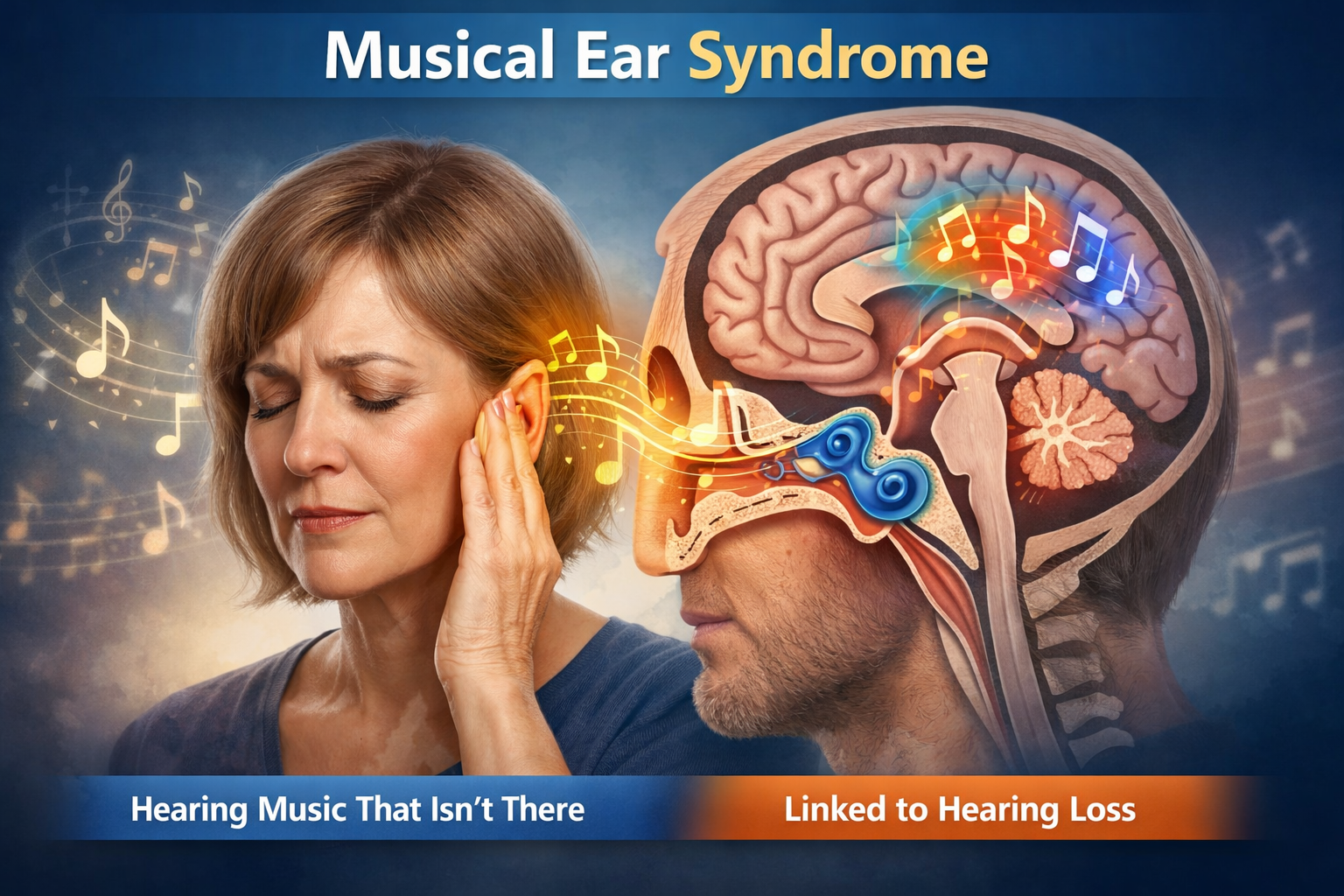
Have you ever heard music playing in your ears when there is no radio, phone, or television around? Many people describe hearing songs, hymns, instrumental music, or familiar tunes that seem very real—but have no external source. This experience can be confusing and sometimes frightening.
This condition is known as Musical Ear Syndrome (MES). It is not a mental illness, and in most cases, it is linked to hearing loss. Understanding Musical Ear Syndrome can help reduce anxiety and guide people toward the right treatment and support.
What Is Musical Ear Syndrome?
Musical Ear Syndrome is a condition where a person hears music, singing, or melodies without any external sound source. These sounds are internally generated by the brain and are often vivid and repetitive.
Unlike auditory hallucinations related to psychiatric disorders, MES usually occurs in people with partial or severe hearing loss. The brain, deprived of normal sound input, begins to “fill in the gaps” by creating music.
How Musical Ear Syndrome Works
The human brain is constantly processing sound. When hearing ability decreases, the auditory part of the brain receives less stimulation. To compensate, the brain may generate its own sounds, often in the form of music.
This process is similar to phantom limb pain, where people feel sensations in a limb that has been amputated. In MES, the brain creates phantom sounds.
Common Symptoms of Musical Ear Syndrome
People with Musical Ear Syndrome may experience:
- Hearing music with no external source
- Songs, hymns, classical music, or instrumental tunes
- Repetitive or looping melodies
- Clear and structured music (not random noise)
- Sounds that become more noticeable in quiet environments
- Awareness that the music is not real
The music may be soft or loud and can last for minutes or hours. Some people hear familiar songs, while others hear unfamiliar melodies.
Causes of Musical Ear Syndrome
1. Hearing Loss
The most common cause of MES is sensorineural hearing loss, especially in older adults. Reduced auditory input triggers the brain to create sound internally.
2. Aging
As people age, changes in the auditory system increase the risk of Musical Ear Syndrome.
3. Ear Conditions
Conditions such as:
- Tinnitus
- Ear infections
- Earwax blockage
- Damage to the inner ear
can contribute to MES.
4. Neurological Factors
In rare cases, MES may be linked to:
- Stroke
- Brain injury
- Epilepsy
- Neurodegenerative conditions
5. Certain Medications
Some medications affecting the nervous system may increase the likelihood of auditory hallucinations.
Musical Ear Syndrome vs Tinnitus
Although MES and tinnitus are related, they are not the same.
| Feature | Musical Ear Syndrome | Tinnitus |
|---|---|---|
| Type of sound | Music or melodies | Ringing, buzzing, hissing |
| Structure | Organized and musical | Random noise |
| Common cause | Hearing loss | Hearing loss or ear damage |
| Awareness | Person knows sound is not real | Person knows sound is internal |
Some people experience both conditions at the same time.
Is Musical Ear Syndrome a Mental Illness?
No. Musical Ear Syndrome is not a psychiatric disorder.
People with MES:
- Are mentally healthy
- Understand the music is not real
- Do not lose touch with reality
This distinction is important because fear and misunderstanding often cause unnecessary stress.
Who Is Most at Risk?
Musical Ear Syndrome is more common in:
- Older adults
- People with moderate to severe hearing loss
- Individuals living alone or in quiet environments
- People with untreated hearing problems
However, it can occur at any age.
Diagnosis of Musical Ear Syndrome
Diagnosis usually involves:
- Detailed medical and hearing history
- Hearing tests (audiometry)
- Ear examination
- Neurological evaluation (if required)
There is no single test for MES. Diagnosis is based on symptoms and ruling out other causes.
Treatment and Management Options
There is no single cure for Musical Ear Syndrome, but several strategies can reduce symptoms.
1. Treating Hearing Loss
Using hearing aids or cochlear implants often reduces or eliminates musical hallucinations by restoring sound input to the brain.
2. Sound Therapy
- Background music
- White noise
- Television or radio at low volume
These help reduce silence, which can trigger symptoms.
3. Education and Reassurance
Understanding that MES is harmless can significantly reduce anxiety and distress.
4. Cognitive Behavioral Therapy (CBT)
CBT can help individuals cope with persistent symptoms and reduce emotional impact.
5. Medication (Rare Cases)
Medication is rarely required and is only considered when symptoms are severe or linked to neurological causes.
Living With Musical Ear Syndrome
Many people learn to live comfortably with MES once they understand the condition. Helpful tips include:
- Avoid complete silence
- Use hearing devices if prescribed
- Maintain social interaction
- Manage stress and anxiety
- Get regular hearing checkups
With proper management, symptoms often become less noticeable over time.
When to See a Doctor
Consult a healthcare professional if:
- The music becomes distressing
- You experience sudden hearing loss
- Sounds are accompanied by confusion or memory issues
- Symptoms interfere with daily life
Early evaluation helps rule out serious conditions and provides peace of mind.


